

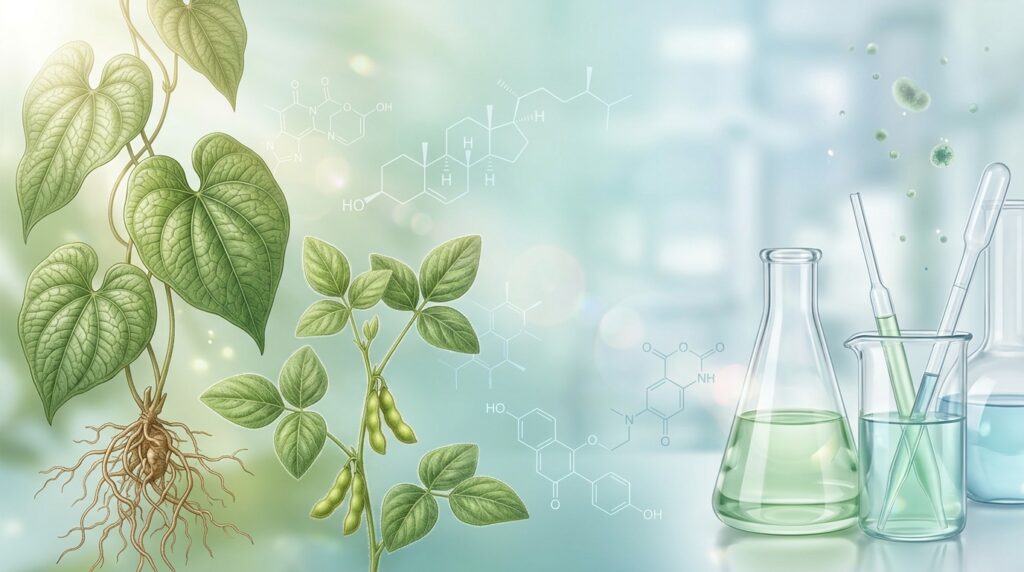
Bioidentical hormones are made from plant compounds, mainly diosgenin from wild yam or stigmasterol from soybeans. In a laboratory, chemists convert these plant compounds into hormones such as progesterone, estradiol, and testosterone that have the same molecular structure as the hormones the human body produces.
The plant is only the starting material. The human body cannot turn wild yam or soy into hormones on its own, so eating yams or using wild yam cream does not provide bioidentical hormones. This guide explains how bioidentical hormones are made, how they differ from synthetic and animal-derived hormones, and what providers should know about compounded versions.
What Does “Bioidentical” Mean?
A bioidentical hormone has exactly the same chemical structure as a hormone made in the human body. Because the structure matches, the body recognizes and processes it the same way.
“Bioidentical” describes the molecule, not where it came from or how it is sold. Bioidentical hormones are available both as FDA-approved products and as compounded preparations. To learn how they are used in treatment, read our guide to bioidentical hormone replacement therapy.
The Plant Sources of Bioidentical Hormones
Wild Yam (Diosgenin)
Mexican wild yam (Dioscorea species) contains diosgenin, a plant steroid. Diosgenin is the classic starting material for making progesterone.
Soybeans (Stigmasterol)
Soybeans contain stigmasterol and other plant sterols. Manufacturers use these as an alternative starting material for hormone synthesis.
How Bioidentical Hormones Are Made
The process has four main stages:
- Extraction. Diosgenin or plant sterols are extracted from wild yam or soybeans.
- Conversion to progesterone. Chemists convert the plant compound into progesterone through a series of laboratory reactions.
- Synthesis of other hormones. Progesterone serves as a building block for other steroid hormones, including estradiol, estriol, testosterone, and DHEA.
- Purification and testing. The finished hormone is purified into a pharmaceutical-grade powder, called an active pharmaceutical ingredient, and tested for identity and purity.
Contact us
Why Wild Yam Cream Is Not the Same as Bioidentical Progesterone
Wild yam extract contains diosgenin, not progesterone. The human body does not have the enzymes needed to convert diosgenin into progesterone. Only a laboratory process can do that.
Over-the-counter “wild yam creams” therefore do not deliver bioidentical progesterone unless progesterone has been added as an ingredient. Prescription bioidentical progesterone contains the finished hormone, made in a lab and verified for strength.
Bioidentical vs. Synthetic vs. Animal-Derived Hormones
| Type | Source | Structure | Examples |
| Bioidentical | Plant compounds converted in a lab | Identical to human hormones | Estradiol, estriol, progesterone, testosterone |
| Synthetic | Made in a lab from various sources | Changed on purpose, not identical to human hormones | Medroxyprogesterone acetate, ethinyl estradiol |
| Animal-derived | Urine of pregnant horses | A mix of estrogens, some not found in humans | Conjugated equine estrogens |
All three types are made or processed in a laboratory. “Bioidentical” refers only to the final molecular structure. For more on how these options compare, read Compounded vs. Commercial Drugs.
Which Hormones Are Available in Bioidentical Form?
The most common bioidentical hormones are:
- Estradiol: the main estrogen during the reproductive years.
- Estriol: a weaker estrogen, often combined with estradiol as Bi-est. No FDA-approved estriol product is sold in the United States.
- Progesterone: often prescribed as oral micronized progesterone.
- Testosterone: prescribed for men and, at lower doses, for women.
- DHEA: a precursor hormone made by the adrenal glands.
FDA-Approved vs. Compounded Bioidentical Hormones
Both types use the same plant-derived active ingredients. The difference is how the final product is made and regulated.
FDA-approved bioidentical hormones are manufactured at scale in fixed strengths. Examples include estradiol patches, gels, and tablets, and oral micronized progesterone capsules.
Compounded bioidentical hormones are prepared by a licensed pharmacist for one patient from a prescription. Compounding allows custom strengths, combinations such as Bi-est, and dosage forms such as creams and troches. Compounded hormones are not FDA-approved, so their quality depends on the pharmacy’s standards.
In 2020, the National Academies of Sciences, Engineering, and Medicine published a report on compounded bioidentical hormone therapy that raised concerns about dose consistency and limited safety data. That is why choosing a pharmacy with strong quality controls matters. To find a reliable source, read How to Source Bioidentical Hormones for Your Practice.
How Quality Is Verified in Compounded Bioidentical Hormones
A reliable compounding pharmacy should:
- Use pharmaceutical-grade active ingredients from registered suppliers.
- Keep a certificate of analysis for every ingredient lot.
- Follow USP <795> for non-sterile preparations such as creams, capsules, and troches.
- Verify the weight and content of each batch.
- Assign beyond-use dates and storage instructions.
Learn more in How Compounding Pharmacies Maintain Quality Control and Are Compounded Medications Safe?
Contact us
FAQs
What are bioidentical hormones made from?
They are made from plant compounds, mainly diosgenin from wild yam or stigmasterol from soybeans, which are converted in a laboratory into hormones identical to human hormones.
Are bioidentical hormones natural?
They start from natural plant sources, but they are made in a laboratory. “Bioidentical” means the structure matches human hormones, not that the product is unprocessed.
Can the body make progesterone from wild yam?
No. The human body cannot convert diosgenin from wild yam into progesterone. Only a laboratory process can.
Are bioidentical hormones FDA-approved?
Some are. FDA-approved products include estradiol and oral micronized progesterone. Compounded bioidentical hormones are not FDA-approved.
Are bioidentical hormones made from soy safe for people with soy allergies?
The finished hormone is a purified molecule, not soy protein. However, some products contain soy-based oils or inactive ingredients. Patients with allergies should ask the pharmacy about every ingredient in the final preparation.
What is the difference between bioidentical and synthetic hormones?
Bioidentical hormones have the same structure as human hormones. Synthetic hormones, such as medroxyprogesterone acetate, are changed on purpose and have a different structure.
Bioidentical Hormone Compounding at Emerald
Emerald Compounding Pharmacy in Tampa, FL prepares bioidentical hormones, including estradiol, estriol, progesterone, and testosterone, in creams, gels, troches, and capsules for medical practices. We are Florida DOH licensed (#PH35337), LegitScript certified, and HIPAA compliant, and we ship the same day on prescriptions received before 2:00 PM EST.